Real Results, Right Now: How Epic AI Is Reducing Costs, Improving Care, and Helping Patients
March 10, 2026
Alongside an expanding AI roadmap, Epic is highlighting measurable outcomes happening today: faster documentation, earlier diagnoses, fewer denials, and improved patient experiences.
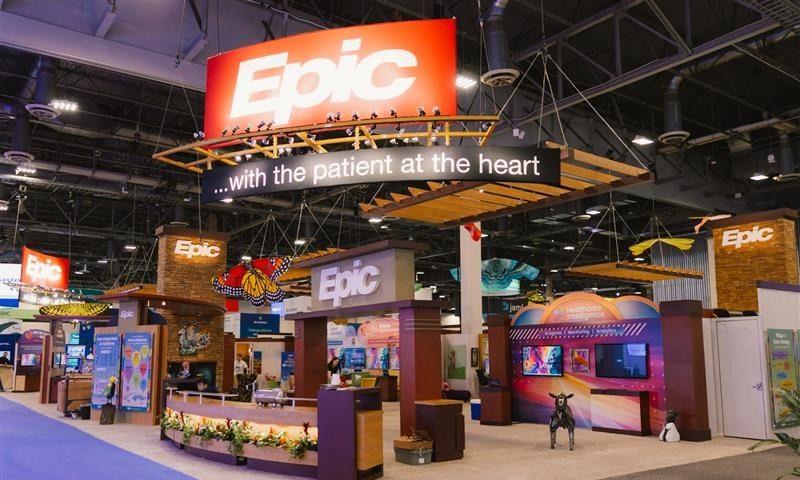
More than 85% of Epic’s customers now use Epic AI. At HIMSS 2026, the company will share what that means for health systems, clinicians, and patients—and where Epic is headed next.
Art brings joy to medicine—and helps patients get treatment sooner
With Art, Epic’s AI for clinicians, care teams have saved thousands of hours of charting time while learning more than ever about their patients. For example:
- Clinicians at multiple organizations are completing discharge summaries 20-30% faster with Art’s Draft Hospital Course Notes.
- At Riverside Health in Virginia, clinicians using Art’s Inpatient Insights are spending up to 32% less time on documentation and communication tasks.
Art is helping patients start lung cancer treatment at earlier stages. At The Christ Hospital, Art extracts incidental findings from radiology results and drives follow-up, delivering an early detection rate of 69% for lung cancer versus the national average of 46%. That can mean catching cancer when it’s still treatable for more patients.
Chart with Art—built-in AI charting that listens during patient visits, drafts the clinician’s note, and queues up orders based on the conversation—launched in February across multiple outpatient specialties. “It’s changed my life and made note-writing so much easier,” Kate Ledford, a doctor at Group Health Cooperative of South Central Wisconsin, said. “It’s saving me time, which is great, but it’s also saving my sanity and allowing me to give more attention directly to my patients.”
In March, Houston Methodist became the first organization to use Chart with Art for bedside nursing workflows. Epic plans to release Chart with Art for home care workflows in April.
Penny delivers better revenue cycle performance and patient experiences
Art works with Penny—Epic’s AI for revenue cycle and operations—to cut through the complexity of prior authorization, an historically time-consuming process for both patients and clinicians. For example, at Summit Health, Penny has cut medication prior authorization submission time by 42%, and 92% of AI-generated responses are accepted without edits. This means patients get answers faster and clinicians experience less administrative friction.
At health care systems most actively using Penny, coding-related denials have dropped by more than 20%—preventing revenue loss due to claim rejections and reducing the need for staff to spend time reworking claims. In addition, organizations are creating denial appeal letters 23% faster with Penny.
Over time, Penny will work more autonomously. For example, Penny will complete coding sessions and appeal submissions independently within each organization’s guardrails.
Emmie helps patients get answers quickly while reducing health system workload
Emmie, Epic’s AI for patients, continues to advance. For example:
- At Rush University Medical Center, Emmie has delivered a sustained 58% reduction in billing-related customer service messages. This frees staff to focus on the most complex cases, while patients get answers to straightforward questions immediately.
- Emmie helps patients schedule and reschedule appointments. At Ochsner Health, patients have rescheduled more than 14,900 appointments so far with Emmie, making scheduling more convenient and saving almost 750 hours of staff time.
- By reviewing detailed clinician documentation and providing patient-friendly conversational follow-ups, Emmie helps patients adhere to their care plans—with a 94% satisfaction rate among patients using Emmie for these follow-up reminders.
- Sutter Health collaborated with Epic to become the first organization live with Ask Emmie, a conversational AI assistant in MyChart that answers patients’ health questions within the context of their medical record. Sutter and Epic worked closely on testing and refining it ahead of launch. Ask Emmie is currently available to an initial group of users, with broader availability planned in the coming weeks.
Epic to continue rapid expansion of AI capabilities
Looking ahead, Epic is further expanding AI across clinical, patient-facing, and operational workflows, with features including:
- Conversational AI for clinicians: As Art listens to the patient visit, it will surface answers to questions that the clinician and patient ask—handling direct questions (e.g., “Art, how is this patient’s blood pressure trending?”) and inferred questions based on conversational context (e.g., surfacing data-driven treatment options if the patient expresses frustration with their current care plan).
- Collaborative visit agendas: Art and Emmie will build visit agendas together, bringing questions and priorities from the patient and clinician into one view.
- Agent Factory: Epic is releasing a fully integrated platform for creating and monitoring AI agents that reason, decide, and act across workflows. Agent actions are traceable, and organizations will be able to customize agents with a visual builder, equip them with local policies and knowledge bases, and deploy them on their own timeline.
- Diagnosis Checker: At the point of care, Art will help clinicians with differential diagnosis by analyzing patterns in patient symptoms, history, and outcomes—and suggest potential next steps based on real-world patient data.
- Curiosity: Epic is creating a new family of medical foundation models trained on anonymized real-world patient records. The models help predict what comes next in a patient journey across diagnoses, medications, procedures, and outcomes.
Upcoming events
To help organizations work together on concrete technology-driven improvements to healthcare delivery, Epic will host XGM 2026 in Verona, Wisconsin on April 27 – May 7. The event brings together informaticists, managers, analysts, trainers, project managers, and clinicians from throughout the Epic community. This will be followed by UGM 2026 on August 17-20 for executives, directors, and clinician leaders.
Additionally, Epic will host the second Open@Epic conference on October 20-22, an event where app developers and healthcare experts come together to explore improvements to data sharing for care coordination and patient experience.
More News from Epic
MyChart Is Now The Leading National Pathway For Organ Donor Registration
In the past year, nearly half of all new additions to the National Donate Life Registry came through MyChart, where a direct connection between the patient portal and the registry makes it easy for people to record their choice to donate.
GLP-1 Prescriptions Quadruple Since 2021 Alongside Decline In Obesity
New Epic Research dashboards show ongoing shifts in GLP-1 uptake and BMI trends in the United States.
Epic Introduces Health Alerts
Epic Research now monitors health conditions across the U.S. at the county level and publishes Health Alerts when elevated rates are detected.
Resources