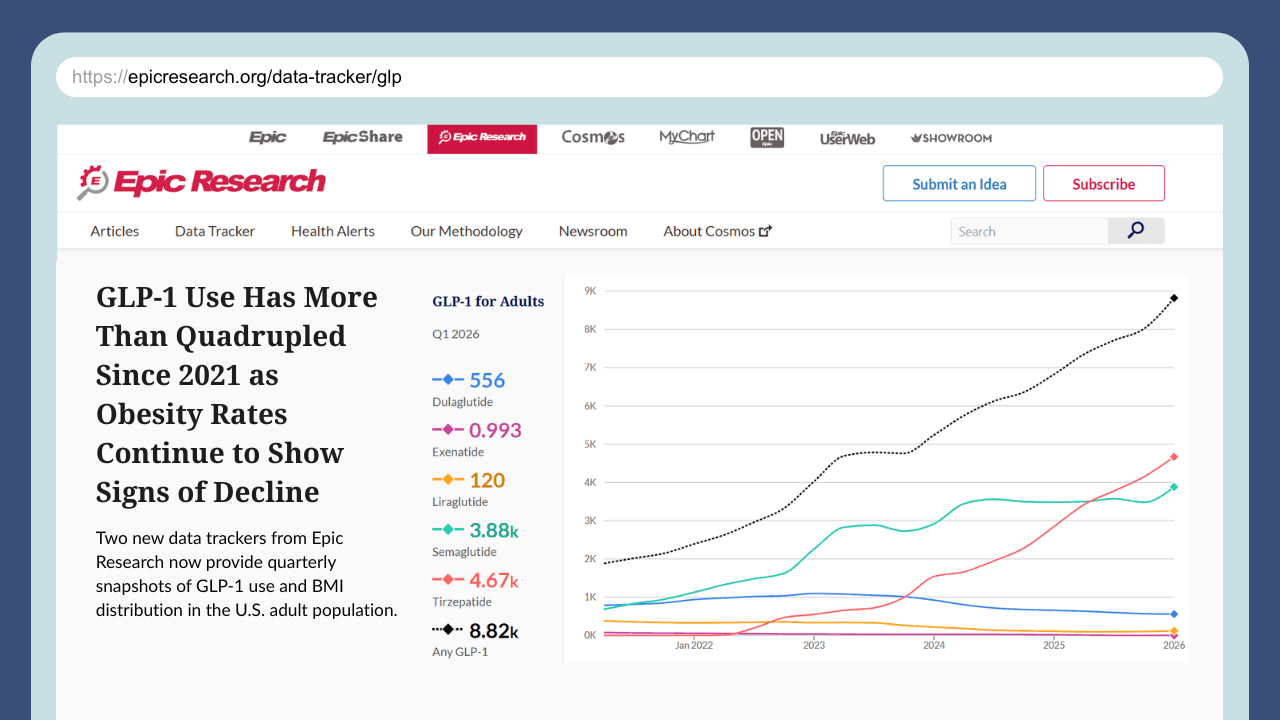
New Epic Research dashboards show ongoing shifts in GLP-1 uptake and BMI trends in the United States.
Two new Epic Research dashboards show how GLP-1 receptor agonist prescribing and adult body mass index (BMI) are trending across the United States. The GLP-1 Utilization Tracker shows prescriptions per 100,000 patients for each GLP-1 medication by quarter. The BMI Tracker shows the distribution of US adults across standard BMI categories over the same period. Both dashboards are refreshed quarterly.
Among US adults, prescriptions for GLP-1 medications such as semaglutide (Wegovy, Ozempic) and tirzepatide (Zepbound) rose substantially—from about 1,900 to 9,000 prescriptions per 100,000 patients—between the second quarter of 2021 and the first quarter of 2026. In the same period, the share of adults classified as obese declined from 42.3% to 40.7%, and the share of adults in the healthy BMI range rose from 25.1% to 25.6%.
“Until 2024, obesity rates in the US had been rising steadily for decades. The decline we’re now seeing is a signal worth watching,” Jackie Gerhart, M.D., Epic’s chief medical officer, said. “These dashboards give clinicians, researchers, and policymakers an ongoing view of how prescribing patterns and population health are moving together.”
Obesity contributes to cardiovascular disease, type 2 diabetes, certain cancers, and other chronic conditions. The GLP-1 receptor agonists semaglutide and tirzepatide have demonstrated substantial weight loss in clinical trials and received FDA approval for chronic weight management in 2021 and 2023, respectively.
Demand for GLP-1 receptor agonists has grown rapidly. These dashboards will help answer questions about uptake and whether population-level BMI distributions continue to shift with current, large-scale data drawn from patient records from throughout the US.