Telehealth Visits Explode as COVID-19 Changes What it Means to See the Doctor
April 7, 2020
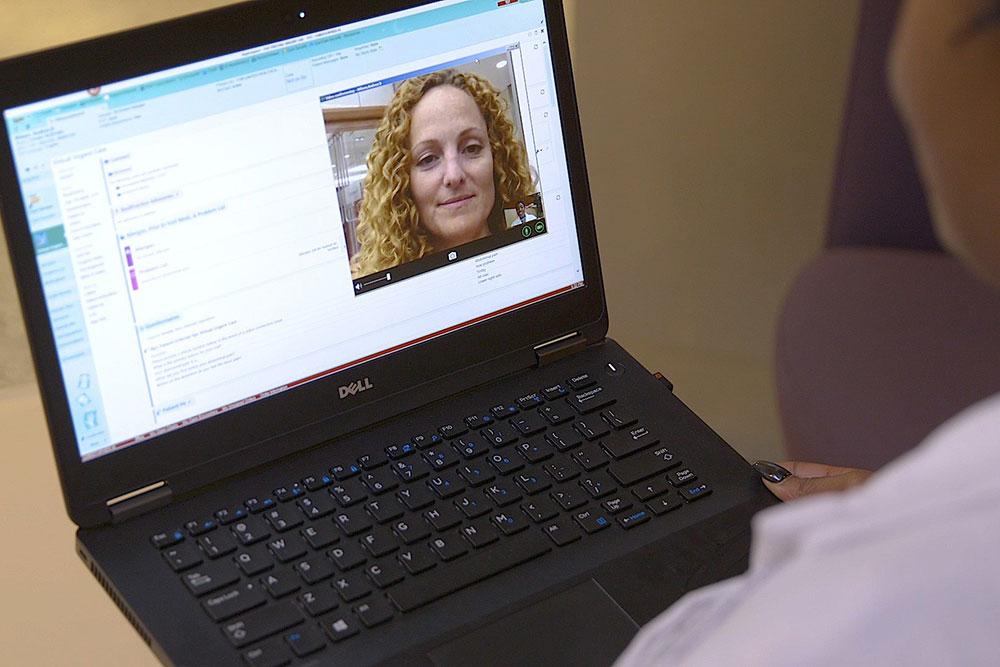
Virtual care is a new reality for doctors, nurses, and other clinicians in a socially distanced world. Millions of people had their first virtual appointments over the past few weeks. For more than 60% of the U.S. population, those appointments likely used software from Epic, the nation’s largest electronic health records company.
“We went from about 200 video visits a year to more than 12,000 a week. Epic’s telehealth infrastructure allowed us to turn on a dime to accomplish this,” said Dr. Keith Griffin, CMIO of Novant Health. “Our growth in these areas is remarkable and I expect even more over the coming weeks. The telehealth team at Epic has done simply amazing work.”
Novant Health is one of more than 200 customers Epic has helped with telehealth setup, expansion, and training. As recently as March 6th, just 6% of primary care visits at UC San Diego Health were virtual. Today it’s more than half. Washington-based Providence St. Joseph Health, one of the nation’s largest healthcare organizations, set up telehealth in a week and went live with more than 7,000 clinicians. In hard-hit New York City, NYU Langone Medical Center went from 20 to 1,300 virtual care clinicians in just a few days and has seen up to 6,500 virtual visits daily. More than 70% of the organization’s visits are now virtual.
“One of NYU’s challenges was allowing clinicians to do virtual visits without coming in so we moved the clinical side to a mobile app,” said Sharon Wobeter, Epic’s telehealth lead for NYU Langone. “We’re now working to expand into the hospital. Doctors and nurses will be able to talk to each other remotely and check in on patients without going into the rooms, limiting exposure and saving protective equipment like masks.”
Telehealth has been a major change for clinicians used to seeing their patients face-to-face. As they adjust, many are discovering it brings a new perspective.
“I thought that telemedicine would remove the human aspect, but it actually enhanced it,” said Dr. Zachary McClain, Program Director for the Children’s Hospital of Philadelphia Division of Adolescent Medicine. “A clinic isn’t always the place where patients are the most comfortable. Through telehealth, we’re seeing patients in their homes, meeting their families, seeing the art on their walls, learning about the things they care about most. We’re able to connect in a way that can actually be more personal.”
More News from Epic
GLP-1 Prescriptions Quadruple Since 2021 Alongside Decline In Obesity
New Epic Research dashboards show ongoing shifts in GLP-1 uptake and BMI trends in the United States.
Epic Introduces Health Alerts
Epic Research now monitors health conditions across the U.S. at the county level and publishes Health Alerts when elevated rates are detected.
Health systems on Epic are first to connect with the Social Security Administration through TEFCA
Customers of Epic are the first to share medical records with the Social Security Administration (SSA) through TEFCA, the federally sponsored interoperability network.
Resources