Do Good: The Ripple Effect of Saying Yes
April 2, 2026
Alison Conklin of Bonus Days Magazine highlights Epic employees’ experiences with living donation and how MyChart supports donor registration.
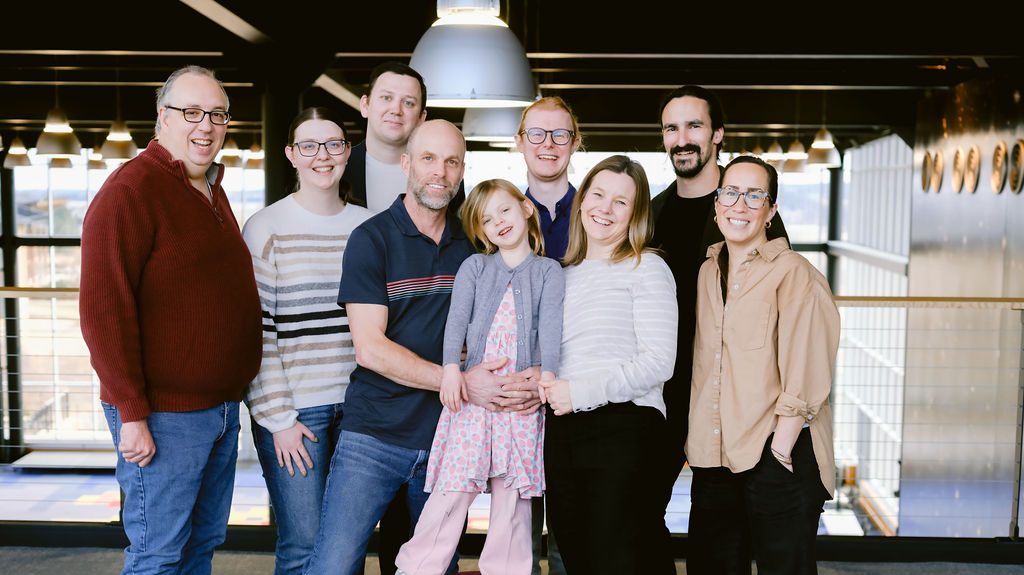
Alison Conklin started Bonus Days Magazine after receiving a heart transplant. Navigating her own stress and uncertainty pre- and post-transplant, she wanted to create something that fostered community for both organ donors and recipients. When she heard that several Epic employees are living donors and learned about the new donor registration option available in MyChart, she asked to visit campus and write this story.
The Spring 2026 issue is available at bonusdaysmag.com
Dana Hellgren did not imagine that her daughter’s story would begin with survival.
She learned early that motherhood does not always begin with lullabies and soft light. Sometimes it begins with monitors, numbers that will not move in the right direction, and the growing fear that something is terribly wrong with the baby in your arms.
Sometimes it begins with learning words you have never heard before and realizing it may decide whether your child lives or dies.
Ila was just weeks old when Dana understood that love alone would not be enough to save her daughter. They would need a miracle measured in medicine, timing, and the generosity of a stranger.
Ila was born early, small enough that doctors expected a few bumps. Jaundice. Slow weight gain. The ordinary worries of a premature newborn. Dana and her partner, Jadon, were sent home believing time would smooth things out.
It did not.
Ila’s bilirubin levels did not drop. She started losing weight. At just a few weeks old, the word normal quietly slipped away.
Then came the words Dana had never heard before. Biliary atresia.
It is rare, about one in 20,000 births, and it is devastating. Ila’s bile ducts were blocked. Her liver was failing. At three months old, she was placed on the transplant list.
“There’s no miracle here,” Dana remembers telling her family, forcing the words out until they felt real. “This is science. A liver transplant is what has to happen to save my daughter’s life.”
Saying it did not make it easier.
Ila was tiny, far too small for most living donors. Dana and Jadon were tested. Friends and coworkers were tested. Hope flickered, then dimmed. The reality was cruel and logistical. Even the people willing to give part of themselves were simply too big.
They waited.
On Christmas night, while visiting family in Iowa, the phone rang. There was a liver available.
Dana and Jadon drove through the night back to Madison, carrying their six month old daughter toward a surgery that would either save her life or take it. Ila received her transplant on December 27, 2019.
She weighed just eight pounds.
The hospital stay lasted nearly a month. Then, just as they brought their daughter home, the world shut down. COVID arrived, sealing their family into a bubble of fear and vigilance.
Becoming new parents is isolating. Raising a transplant child is isolating. Doing both in a pandemic was something else entirely.
Dana remembers the grief that did not have time to surface. The pregnancy she imagined. The newborn photos that never looked like other babies. The ache of seeing healthy infants with full cheeks while her daughter was yellow, fragile, and fighting to stay alive.
“You don’t have time to process,” she says. “All you care about is that she’s still alive. She’s still alive.”
Ila survived. She grew. She endured procedures, stents, blood draws, and life sustaining medications twice a day. Over time, Dana learned that the liver keeping her daughter alive once belonged to a little boy. She stays in touch with his family through school photos, Christmas cards, and small, intentional gestures that honor a life now forever woven into theirs.
Today, Ila is six. She swims. She plays soccer. She takes karate. She walks to friends’ houses. She is bright, empathetic, joyful. A ray of sunshine, Dana says. Most people never guess what her body has already been through.

“This isn’t her whole identity,” Dana explains. “It’s part of her story, but it’s not the first thing we want her to think about.”
Still, the transplant is never far from view. Medications. Labs. The quiet awareness that life depends on something given freely by another family on their worst day.
At Epic, a Wisconsin-based healthcare technology company, Dana spoke during a staff meeting about how technology changes lives. Epic’s electronic medical record system connects millions of patients and providers and quietly shapes the way modern medicine is delivered.
She spoke about MyChart not as an Epic employee, but as a transplant parent. She described the relief of seeing normal lab results appear in real time. The steady back-and-forth messaging with her daughter’s medical team. The quiet peace that comes from data continuity when your child’s life depends on it.
Dana stood in front of the entire company speaking about why the work Epic does matters and, in turn, inspired her colleagues in ways she had never imagined.
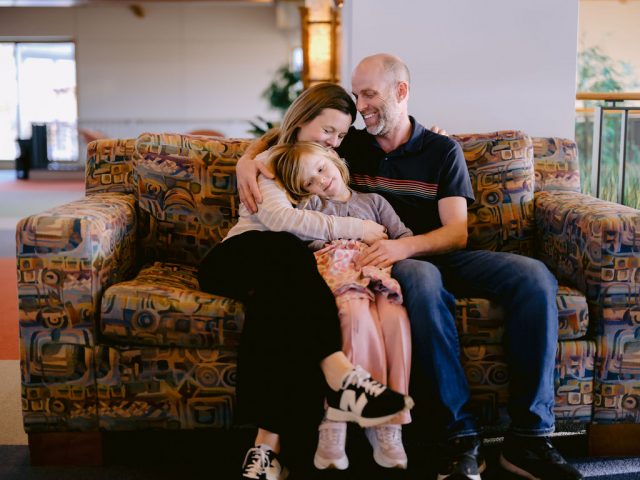
For some, Dana’s story was the first time transplant stopped being theoretical or something only known from television.
Tommy Pierre was sitting in the audience that day.

Transplant was not new to him. Years earlier, he had taken serious steps toward becoming a non-directed donor. In 2019, he completed the workup and was approved to donate anonymously. But the weight of the decision felt abstract. He knew someone would benefit, but he did not know who. The impact felt theoretical.
Then he heard Dana’s story.
Listening to her speak about her daughter and the real, lived impact of transplantation changed something in him. What had once felt like an idea suddenly had faces. It had a family. It gifted a future.
“I originally got approved to donate anonymously, but got cold feet towards the end,” Tommy says. “Then, a few years later, I saw Dana share her story about her daughter and her family and it reinvigorated my desire to donate.”
He continued, “It made the decision easy to see a real family impact and know that I could turn someone’s life around. The whole time prior to this, I just had a vague idea of who would benefit, and hearing real stories about transplant recipients took it from theory to real life, so to speak. That same day, I reached back out to my transplant coordinator and donated just a few months later.”
One story led to one decision. One decision led to a transplant. And the ripple continued.
Megan Bird carried Dana’s story with her for years.
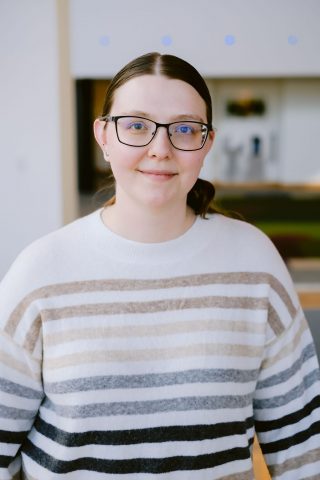
From 2019 to 2021, Dana was Megan’s manager at Epic. During that time she watched Dana navigate Ila’s transplant and advocate for organ donation within the company. The experience stayed with her.
“Her family’s story opened my eyes to the profound impact organ donation can have on families,” Megan says. “I learned a lot about transplantation during that time, largely because Dana continued to speak about it.”
Years later, the idea returned in a more personal way. In February 2025 Megan learned that someone in her community needed a kidney donor.
In July 2025 she donated a kidney through the National Kidney Registry, providing a voucher to a community member who later received their transplant.
“Being able to help another human being in this way has been a life experience that has impacted me in so many positive ways,” she says.
Katie Lee had been there before.
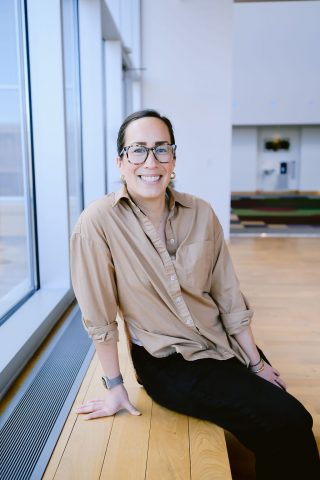
Years earlier, when Dana first shared that Ila needed a liver donor, Katie did not hesitate to get tested. She was not a match. A deceased donor would ultimately save Ila’s life. Still, the act of raising her hand stayed with her.
“I couldn’t stomach the anguish and fear they must have been feeling,” Katie says. “When Dana posted about needing a liver donor, I didn’t hesitate.”
The moment that shifted her toward kidney donation came later, on a dark highway in winter. Her sister’s family hit a deer. Their car burst into flames. Two small children stood freezing on the roadside while cars streamed past. Finally, someone stopped.
“All I could think was how many times have I been that person driving past,” she says. “When I got the call about my kidney being viable for donation, I thought, someone needs help. I can stop and help.”
Her kidney went to a stranger and began a chain of transplants. She still keeps the note Dana sent her after the surgery, thanking her for giving their family hope during their darkest time.
Others were listening too.
Rachel Handleton registered with the Gift of Life marrow registry during her senior year of college. When she received the call that she was a match for a patient in need of blood stem cells, she said yes without hesitation.
She later met her recipient on Zoom and then in person. Years later, they visited his doctor together for his five year post-transplant appointment.
For Harry Freedman, donation feels almost routine. He donates blood regularly and gave bone marrow when called.
“I see it as a good way to help others that’s pretty easy for me to keep as part of my routine,” he says. “An easy decision.”
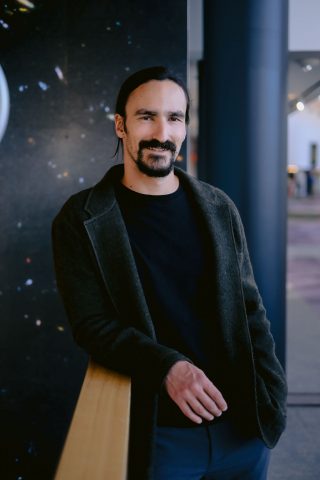
Calvin Kanzenbach’s journey began not with crisis but with philosophy. In a college ethics class, he read an argument that those who can donate a kidney safely ought to do so. The idea stayed with him for years until he finally followed through.
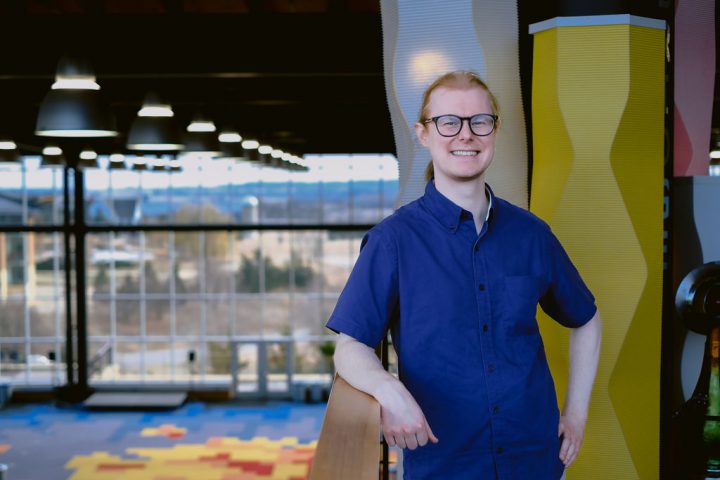
“In a world with huge problems where one person can’t make much difference, this is something enormously positive you can do,” he says. “You can change someone’s life for the better.”
Within Epic’s culture of doing good, one story sparked another, and then another. Conversations turned into testing. Testing turned into surgeries. Surgeries turned into advocacy.
After Dana spoke, colleagues partnered with Donate Life Wisconsin at company blood drives to register organ donors. That effort grew into a collaboration with Donate Life America, allowing patients to register as organ donors directly within MyChart and securely sending their registration to the National Donate Life Registry.
As of March 2026, more than 170,000 registrations have come through that integration.
“By collaborating with Epic MyChart, we are reaching people where they already manage their health – creating a seamless, trusted pathway for lifesaving generosity and empowering millions to make a difference and help save and heal lives,” explains David Fleming, President and CEO of Donate Life America.
Erv Walter knows the other side of that yes.

In June 2019, five years after a surprise diagnosis of congestive heart failure at age 38, he received a heart transplant. He understands exactly what it means to wait. To measure time in labs and phone calls. To wonder whether a stranger somewhere might make a decision that changes everything.
Today, he lives and works alongside the very colleagues who are raising their hands to donate, inside a company built around the idea that technology can do good in the world.
It is survival. It is second chances. It is someone else choosing to help.
It began with a mother sharing about her daughter’s life.
It continued with a coworker listening.
Ripple effects are rarely dramatic.
They move quietly. A hand raised. A test scheduled. A surgery completed. A registration form checked.
Somewhere tonight, someone is waiting for a phone call in the dark.
Because one family chose to share their story, that call may come sooner. And when it does, it will carry not just medicine, but the echo of every person who decided to stop and help.
More Epic in the News
Judy Faulkner on Leadership, Caring for Customers, and the Future of Healthcare
March 13, 2026
Epic's founder and CEO reflects on what has shaped the company—and where AI and prevention are taking healthcare next.
Akron Children’s Reduces Waste Anesthesia Gases with Real-Time Analytics
March 11, 2026
A pediatric anesthesiologist describes how Epic helped the hospital eliminate nearly 500 metric tons of carbon dioxide emissions in a single year.