Epic Research Deepens Support for Outbreak Detection and Monitoring
February 24, 2026
Updates include alerts for outbreak detection and age-based filtering of Communicable Diseases Data Tracker.
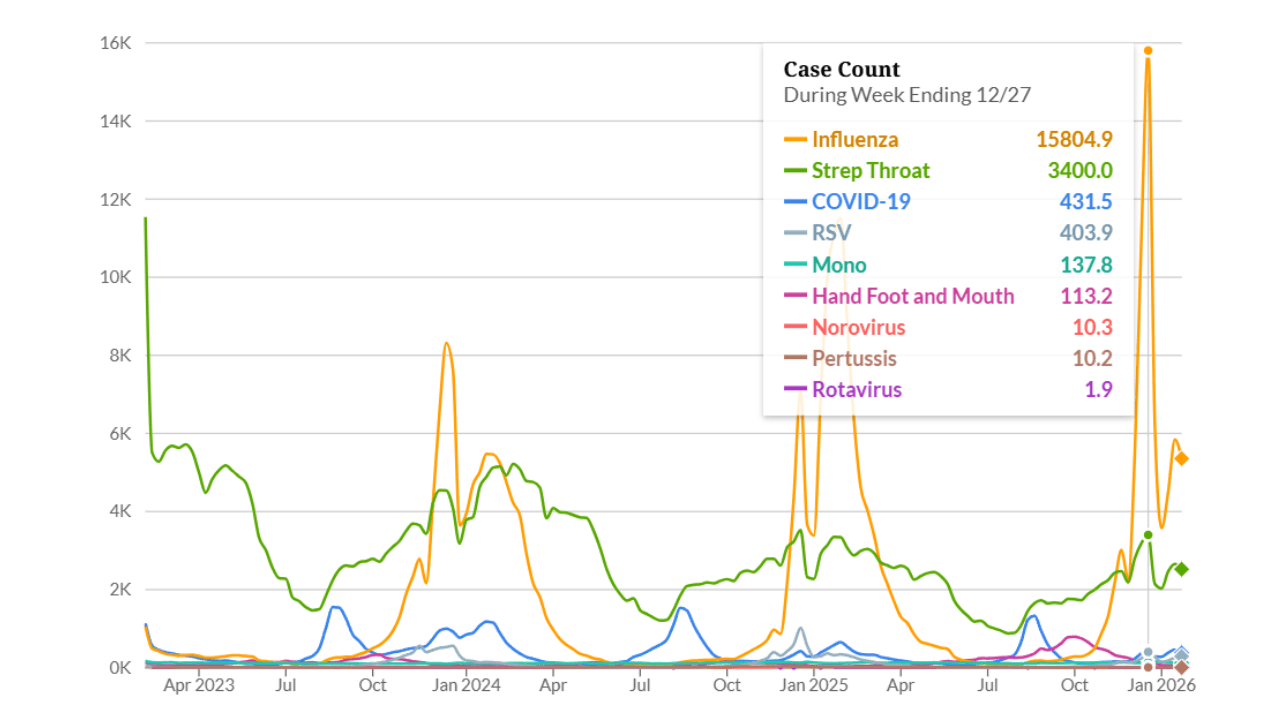
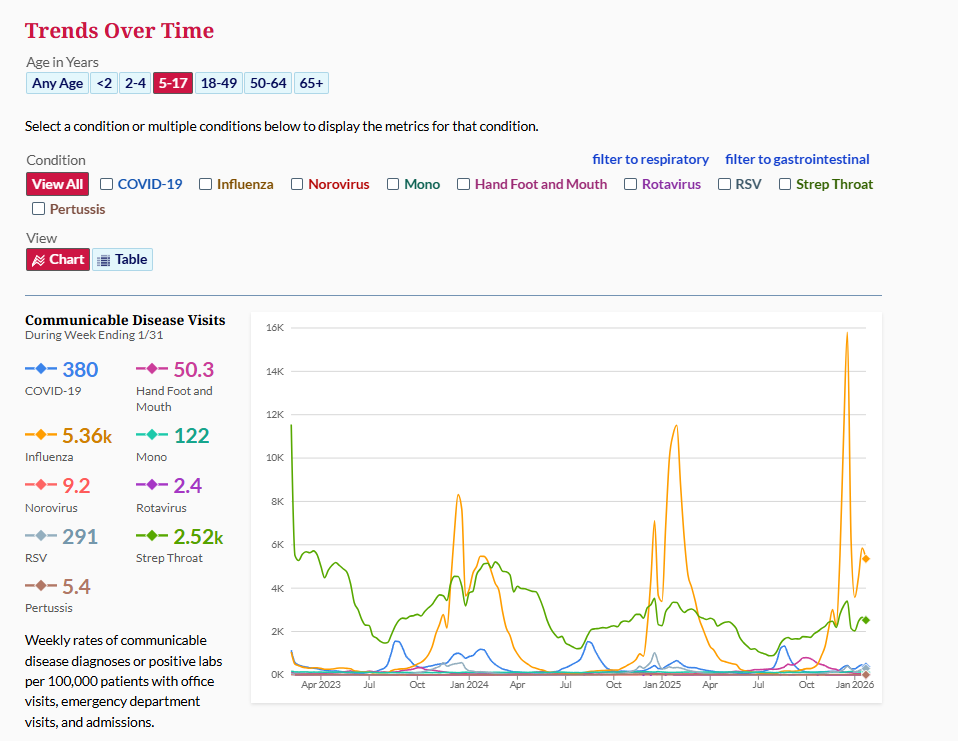
Epic Research’s Communicable Diseases Data Tracker—a free, public tool for monitoring the spread of infectious diseases across the United States—now enables users to segment communicable disease trends (including influenza and eight other conditions) by six age groups: under 2; 2–4; 5–17; 18–49; 50–64; and 65 and older.
This update brings new depth to the tracker, which has already proven valuable for outbreak detection. In October 2025, Epic Research used trends in the data to publish a data tracker insight identifying a spike in hand, foot, and mouth disease nationwide, pointing to an outbreak in Tennessee where incidence was more than double the national average.
This spring, Epic Research is launching Health Alerts—a new tool that will expand these outbreak detection capabilities to flag when conditions such as salmonella or measles rise above expected values in individual counties.
Both tools are enabled by Cosmos, a dataset of more than 300 million anonymized patient records created in collaboration with a community of 1,900 hospitals and 42,000 clinics using Epic.
“Access to reliable, timely health data is foundational to good decision-making,” said Caleb Cox, head of research at Epic. “Our goal with age-based insights and Health Alerts is to use Cosmos data to contribute in a meaningful way—making population-level trends available to health systems, public health partners, and policymakers so they can prepare, coordinate, and respond.”
About Epic Research
Epic Research gets good data out quickly to help inform healthcare practice and public policy decisions by evaluating timely, topical, and relevant health questions and making findings and trackers available to the public at no cost at EpicResearch.org
More News from Epic
Epic Introduces Health Alerts
Epic Research now monitors health conditions across the U.S. at the county level and publishes Health Alerts when elevated rates are detected.
Open@Epic to Return in 2026 as Healthcare Data Sharing Accelerates
Conference supports ongoing collaboration between app developers and Epic, delivering more ways for patients to manage their health.