Artificial Intelligence Triggers Fast, Lifesaving Care for COVID-19 Patients
April 22, 2020
Epic's machine learning model scans health records and alerts doctors automatically before patients need an ICU admission or other care intervention
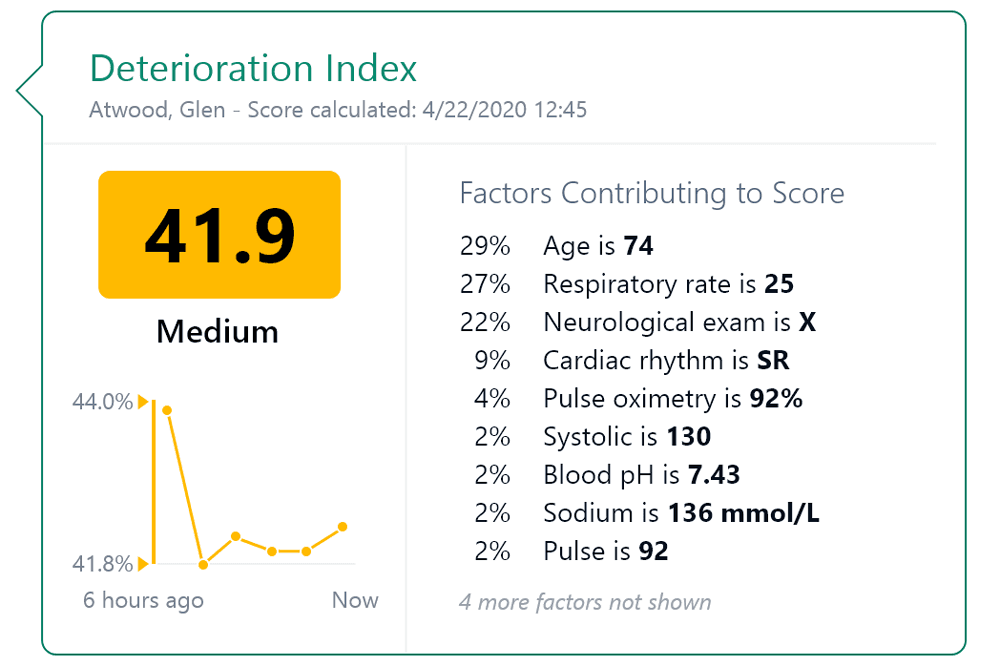
One of the most challenging things about COVID-19 for healthcare providers is how quickly some cases of the disease become life-threatening. A predictive model from Epic is helping doctors intervene with life-saving care before hospitalized patients deteriorate.
“This is helping save lives. The model predicts which patients are getting worse and will need more care. It shows us if things are changing rapidly,” said Dr. Daniel David, Clinical Professor of Medicine at Confluence Health, an integrated healthcare organization serving North Central Washington.
Hundreds of hospitals are using the predictive model. It evaluates patients’ risk of getting sicker in real time by tracking thousands of pieces of data generated by heart rate, blood pressure, temperature, and other monitors. The model helps clinicians by rapidly analyzing data from these sources and notifying staff if things are getting worse. Notifications are displayed on screen, included in reporting dashboards, or pushed out to clinicians’ smartphones.
“Frontline healthcare workers are busy caring for patients. By keeping a watchful eye, the system helps clinicians direct their attention to patients who need it most,” said Seth Hain, Epic data scientist and Senior Vice President of Research and Development.
Epic has enlisted research organizations like Stanford Health Care to validate the model for COVID-19. Many organizations, such as Confluence Health, have completed validation and are already using it for these patients.
The predictive model is one of many analytics tools Epic and its customers are bringing to the fight against COVID-19. Another tool, SlicerDicer allows doctors to combine and sort through data in different ways. For example, if a doctor suspects that there is a COVID-19 hotspot in her community, she can verify it by using the system to cross-reference positive tests with patient ZIP Codes. She can then alert public health officials.
Epic is also working with its customers to find an easy way to get the right data to public health officials in order to help them understand and limit the spread of the pandemic.
More News from Epic
Automated Outreach Helps Patients Keep Millions of Appointments
With Epic’s Hello World communication platform, health systems keep patients connected to their care teams through text messages and voice calls. Its newest capability automatically shows patients that the call is coming from the health system, so they know to pick up.
At Agent Factory Build-A-Thon, Health Systems Create Their Own AI Agents
Clinical, operational, and technical staff from health systems are working together to turn their ideas into agents that can help improve patient outcomes, increase patient engagement, reduce administrative burden, and more.
The AI-supported outpatient office visit helps clinicians arrive prepared, anticipates what they need in the room, and lines up documentation and orders for clinician review before the visit ends.